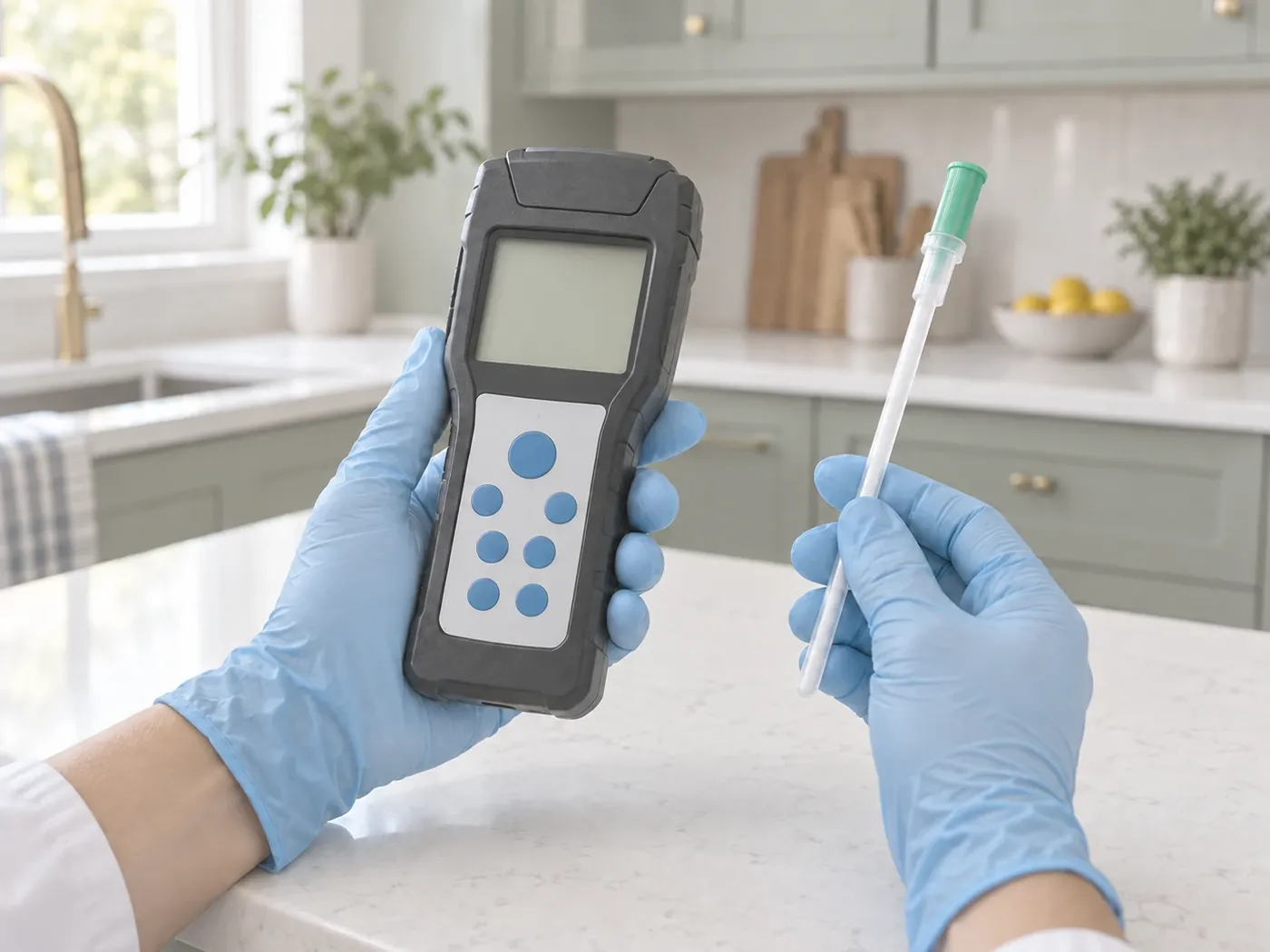
ATP surface testing.
We don't guess. We test, using ATP technology from the world of clean rooms and hospitals, and show you the before-and-after numbers.
What ATP is
ATP (adenosine triphosphate) is the energy molecule found in living cells, including bacteria, mold and the residue they leave behind, like food, skin oils and saliva. An ATP meter reads how much is on a swabbed surface and shows a number. Lower means cleaner.
How we use it
- We swab key surfaces before we start, like counters, faucets, door handles and switches.
- We swab the same spots again after, so you see the change on the same surface.
- Readings appear in seconds, right in front of you, and we film them for your records.
- If a surface doesn't test cleaner, we re-clean it on the spot and test again.
Who else uses it
Hospitals use ATP testing to check how well patient rooms were cleaned, and food plants use it to check equipment before production. Pharmaceutical labs use ATP-based methods too.
What ATP testing does not do
We'd rather you hear this from us. An ATP reading measures organic residue. It doesn't tell live germs from dead ones, it isn't a test for any one virus, and readings from different meter brands aren't comparable. That's why we show you before-and-after readings on the same spots with the same meter, instead of promising a magic number.
Sources: Infection Control Today, ATP bioluminescence testing; Hydrite, ATP swabbing methods.